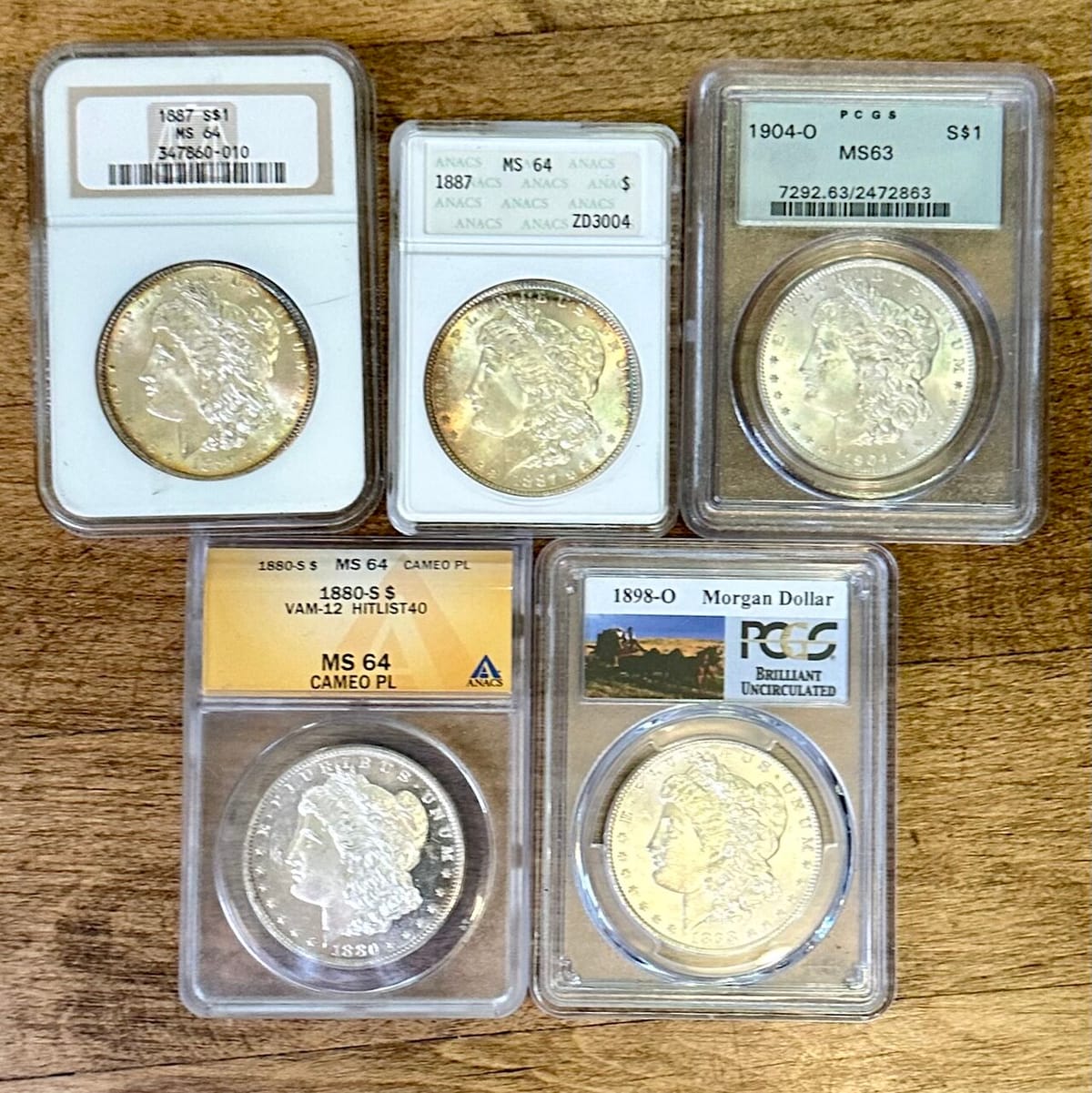
PCGS and NGC are the two biggest coin grading services, and dealers accept both without argument. Each one authenticates a coin, grades it on the 70-point Sheldon scale, seals it in a tamper-evident plastic holder (the “slab”) and guarantees the result.
For most people the choice comes down to price, what their buyers prefer, and whether the coin is worth grading at all. The comparison below uses both companies’ own published 2026 fees.
PCGS vs NGC at a glance
| PCGS | NGC | |
|---|---|---|
| Founded | 1986 (first coins graded February 3) | 1987 |
| Headquarters | Santa Ana, California | Sarasota, Florida |
| Owner | Collectors Universe | Certified Collectibles Group (Blackstone since 2021) |
| Items certified | “Over 60 million” coins, notes, medals and tokens | “More than 70 million” coins |
| Cheapest per-coin tier | Modern Value, $17 (1965+, up to $300) | Modern, $20 (1965+, up to $3,000) |
| Typical classic U.S. coin tier | Regular, $42 (up to $3,000) | Standard, $45 (up to $3,000) |
| Handling fee | $10 per submission | $10 per submission |
| Membership to submit | Collectors Club, required | Collectors Society Associate, $39/yr and up |
| Holder | NFC chip in every holder | EdgeView holder (edge visible) |
| Population report | PCGS Population Report | NGC Census (updated weekly) |
| Price guide | PCGS Price Guide / CoinFacts | NGC U.S. Coin Price Guide |
| Guarantee | Pays market value if a resubmitted coin grades lower or isn’t genuine | Regrade and pay the difference, buy back, or replace |
The two companies count differently: PCGS’s figure includes banknotes, medals and tokens, so neither number proves one is bigger.
How much does PCGS grading cost in 2026?
PCGS’s current fee schedule took effect August 1, 2026. Every submitter must be a Collectors Club member.
| PCGS tier | Max value per coin | Fee per coin |
|---|---|---|
| Modern Value (1965 and later) | $300 | $17 |
| Economy (no gold, no hammered coins) | $300 | $24 |
| Modern (1965 and later) | $3,000 | $30 |
| Regular | $3,000 | $42 |
| Express | $10,000 | $70 |
| Walkthrough | $50,000 | $150 |
| Rarities | No limit | $300 + 1% of value |
Extras on the 2026 schedule: TrueView photos $5 a coin (included at Regular and above), variety attribution $20, First Strike designation $18, and an oversized holder $20. Every submission carries a $10 handling fee. Colonials, fractional gold, patterns, territorials, tokens and medals have to go Regular or higher.
How much does NGC grading cost in 2026?
NGC’s posted U.S. coin fees and turnaround estimates, checked November 13, 2026:
| NGC tier | Max value per coin | Fee per coin | Est. turnaround (working days) |
|---|---|---|---|
| Modern (1965 and later) | $3,000 | $20 | 60 (30 with Fast Track) |
| Economy | $300 | $25 | 60 (30 with Fast Track) |
| Standard | $3,000 | $45 | 30 (15 with Fast Track) |
| Gold | $5,000 | $45 | 10 |
| Express | $10,000 | $80 | 7 |
| WalkThrough | $25,000 | $175 | 7 |
| Unlimited WalkThrough | No limit | $350 + 1% of value | 7 |
Fast Track adds $15 a coin. NGC also charges $10 handling per submission plus return shipping. To submit directly you need at least an Associate membership ($39 a year). Premium ($159) includes a $150 grading credit, and Elite ($329) adds bulk rates and 10% off.
Which one is cheaper?
For most submissions, the difference is a few dollars a coin:
- For modern coins worth under $300, PCGS Modern Value ($17) is the cheapest tier at either company.
- Modern coins worth $300 to $3,000 cost less at NGC Modern ($20) than at PCGS Modern ($30).
- Classic U.S. coins under $300 are a wash: PCGS Economy is $24 and NGC Economy is $25.
- Classic coins up to $3,000 cost $42 at PCGS Regular and $45 at NGC Standard.
- NGC has a dedicated Gold tier at $45 with a 10-day estimate for gold coins up to $5,000. PCGS gold under $3,000 goes Regular ($42).
On a small submission, the membership fee adds more to the cost than the per-coin fee does. Five coins at NGC Standard cost $225 in fees, plus $10 handling and at least $39 for membership: $274, or about $55 a coin before return shipping and insurance. Our coin grading cost calculator adds shipping from each company’s own table and shows the all-in cost for your coins.
Which one is faster?
NGC publishes working-day estimates right on its fee page, from 7 days for Express and WalkThrough to 60 for Modern and Economy without Fast Track. PCGS posts estimated turnaround on its services page, calls them estimates, and says they aren’t guaranteed. Clocks start at different points: NGC’s estimate runs from when the package arrives, and PCGS’s from the business day after the order is entered.
We track both, plus ANACS and CAC, on our coin grading turnaround times page.
Do PCGS coins sell for more than NGC?
Sometimes, in some series, and it’s hard to measure. Many dealers say PCGS holders bring a modest premium for classic U.S. coins like Morgan dollars and early type coins, and both companies point to their own sales records to argue they’re the one buyers prefer. We didn’t find any independent, published dataset that measures a consistent PCGS premium, so treat specific percentages you see online as opinion.
The two services don’t grade identically. A 2003 Coin World study found they didn’t agree on the grade of the same coins in any of the cases it tested, so a coin that’s a “weak 65” at one service can be a 64 at the other.
With bullion, the holder makes little difference. One large dealer’s October 2026 buy list priced a 2006-W Gold Eagle graded NGC MS69 the same as a raw Gold Eagle. Graded bullion trades on metal value unless the grade is a 70 or the coin is scarce.
The preference that counts is your buyer’s. If you plan to sell through a particular auction house or to a specialist in one series, ask which holder they’d rather see.
What does CAC add?
CAC (Certified Acceptance Corporation) was founded in 2007 by John Albanese, who also co-founded PCGS and founded NGC. It reviews U.S. coins already in PCGS or NGC holders and adds a sticker if it agrees with the grade: green for solid for the grade, gold for high-end enough for the next grade up. Stickered coins often bring a premium in classic U.S. series.
In 2023 CAC opened its own grading service, CAC Grading (CACG), which grades U.S. coins and began accepting Canadian coins on January 15, 2026.
Is it worth getting a coin graded?
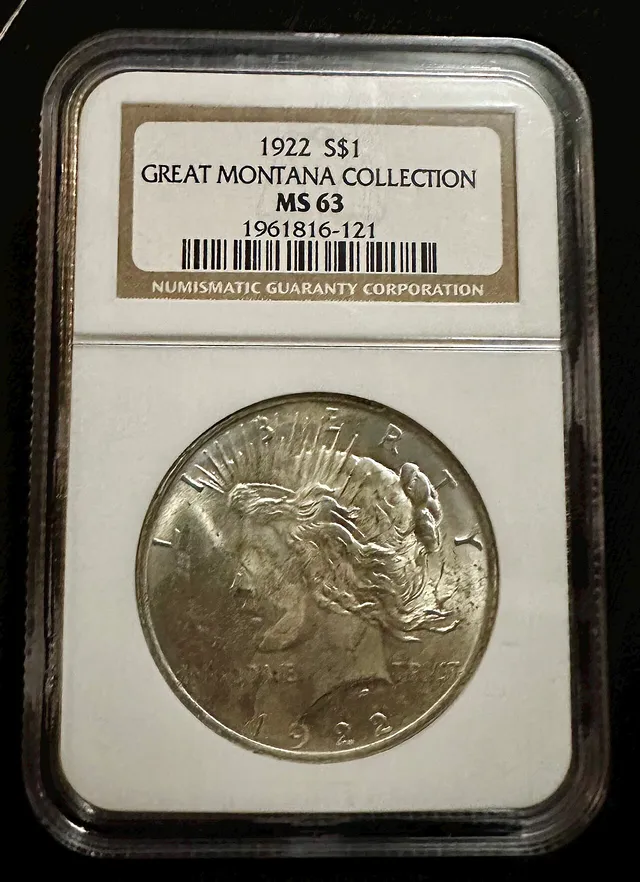
Grading pays when a certified coin will sell for more than the same coin raw by more than the full cost of grading. That cost is the tier fee plus your share of handling, membership and insured return shipping, usually $45 to $80 a coin on a small submission.
It is usually worth it for:
- Key dates and scarce varieties, where buyers want proof the coin is genuine.
- Coins that may grade high (MS65 and up for classic coins, 70 for moderns), where each point can change the price a lot.
- Valuable coins you plan to sell online, where buyers can’t see the coin in hand.
It usually isn’t worth it for:
- Junk silver, common circulated coins and most bullion. Dealers pay for the metal either way.
- Cleaned, damaged or harshly worn coins. Both services will return them in “details” holders that note the problem, and buyers discount those.
- Coins you’d keep anyway and that aren’t at risk of being counterfeit.
If you aren’t sure, ask a coin shop first. Many dealers are authorized PCGS or NGC dealers who will look at a coin, tell you whether grading makes sense, and submit it for you, which also skips the membership fee.
How to choose
| Your situation | What to do |
|---|---|
| Selling classic U.S. coins at auction | PCGS is the default for many specialists; check with the auction house or buyer you plan to use. |
| Modern coins and moderns worth over $300 | NGC Modern at $20 is the better price. |
| Gold coins under $5,000 | NGC’s Gold tier has the fastest posted estimate. |
| One or two coins | Submit through a dealer and skip the annual membership. |
| Coin already in one holder | Leave it unless a crossover or CAC sticker would clearly raise what a buyer will pay. |
Want help deciding? Find a coin dealer near you who’s an authorized PCGS or NGC dealer and ask before you pay for a membership.
Common questions
Is PCGS or NGC better?
Neither is better across the board. Both are accepted by every major dealer and auction house and both guarantee their grades. Many dealers say PCGS coins bring a small premium in classic U.S. series such as Morgan dollars, but we found no published dataset that measures it. For modern coins and bullion the difference is usually negligible.
How much does it cost to get a coin graded in 2026?
PCGS charges $17 (Modern Value, up to $300) to $150 (Walkthrough) per coin, and NGC charges $20 (Modern) to $175 (WalkThrough). Both add a $10 handling fee per submission plus return shipping, and both require a paid membership to submit directly: PCGS Collectors Club from $69 a year and NGC Associate at $39 a year.
Do I need a membership to send coins to PCGS or NGC?
To submit directly, yes. NGC's cheapest submitting level is Associate at $39 a year. PCGS requires a Collectors Club membership. The other route is to submit through an authorized dealer, which many coin shops are.
How long does grading take?
On November 13, 2026, NGC's posted U.S. estimates ranged from 7 working days (Express) to 60 (Modern and Economy without Fast Track). PCGS posts its estimates on its services page and calls them estimates, not guarantees.
Is it worth getting my coins graded?
Only when a certified coin will sell for more than the raw coin by more than the total cost of grading, which is usually $45 to $80 a coin once membership, handling and shipping are spread across a small submission. Common silver and modern bullion rarely clear that bar.
What is a CAC sticker?
CAC reviews U.S. coins already in PCGS or NGC holders and adds a green sticker if it judges the coin solid for its grade, or gold if it's high-end enough for the next grade. Since 2023 CAC also runs its own grading service, CACG.
Can I cross a coin over from NGC to PCGS?
Yes. Both services accept crossover submissions, where you set the minimum grade you'll accept and the coin stays in its old holder if it doesn't make it. Fees follow the tier for the coin's value.
What happens if a graded coin turns out to be fake or overgraded?
Both companies guarantee authenticity and grade for coins that stay in their original holder. NGC will regrade and pay the difference, buy the coin back, or replace it. PCGS pays the market value difference. Neither covers damage that develops after the coin was sealed.
Where to buy
Online dealers for gold and silver
When a local shop doesn't have what you want, these established online dealers ship insured nationwide.
APMEX
One of the largest U.S. online bullion dealers, trading for 20+ years with 1M+ customers.
- Gold & silver coins, bars and rounds
- Live prices tied to spot
- Insured shipping to your door
Bullion Exchanges
Online precious-metals dealer with a deep catalog of bullion coins and bars.
- Gold, silver & platinum bullion
- Government-minted coins and private bars
- Ships nationwide
Keep going
Sources
- PCGS: 2026 Collector Services & Fees, Coins (effective August 1, 2026)
- PCGS: Services
- PCGS: Guarantee
- NGC: Services and fees (U.S. coins)
- NGC: Collectors Society membership levels
- NGC: Guarantee
- NGC: About (coins graded)
- NGC: EdgeView holder
- NGC: Census (population report)
- Wikipedia: Professional Coin Grading Service
- Wikipedia: Numismatic Guaranty Company
- Wikipedia: Certified Acceptance Corporation
- CAC Grading: Grading services and turnaround
- CoinShop Finder: Coin grading turnaround times (October 2026 snapshot)