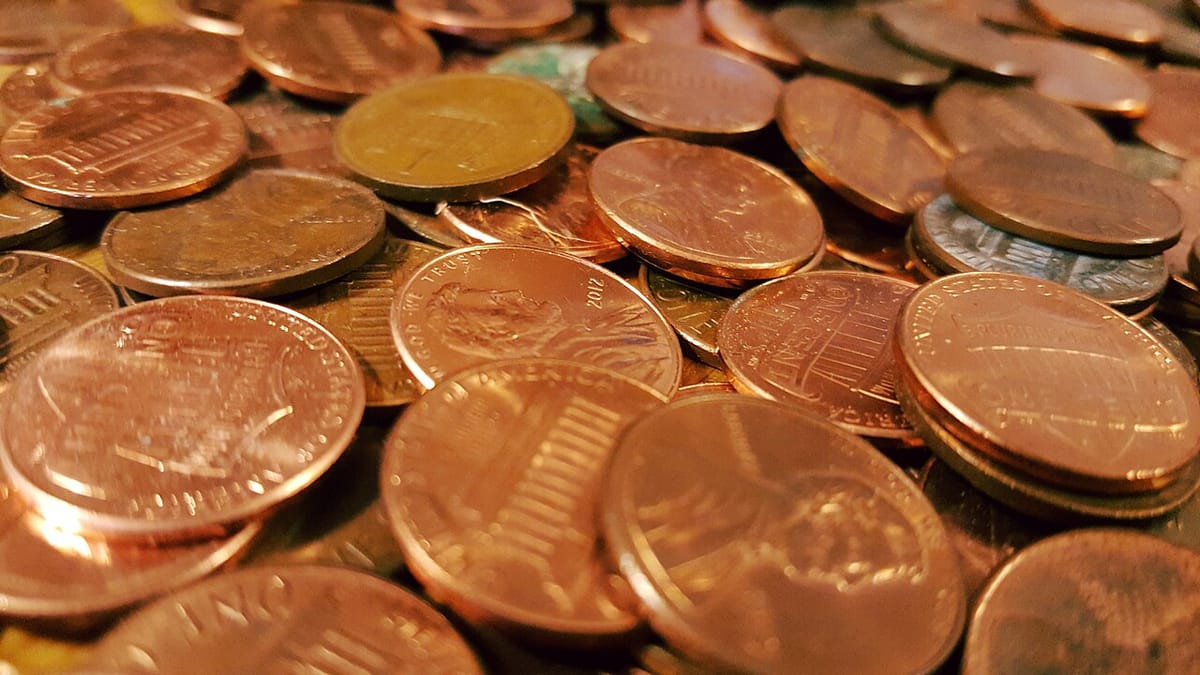
Yes. The U.S. Mint struck its last circulating pennies on November 12, 2025, in Philadelphia, after more than 230 years of production. It stopped because of cost. Each penny cost the Mint 3.69 cents to make and ship in fiscal 2024 and 3.02 cents in fiscal 2025, according to its annual reports.
Pennies aren’t going away overnight, though. The ones already in jars and registers are still legal tender, banks still take them, and stores that run short are rounding cash totals to the nearest nickel. Below is what changed and when, and how it works at the checkout.
When did the U.S. stop making pennies?
| Date | What happened |
|---|---|
| February 9, 2025 | The President directed the Treasury Secretary to stop producing new pennies, calling it wasteful. |
| May 22, 2025 | Treasury said the Mint had placed its final order for penny blanks and would stop once they ran out. |
| November 12, 2025 | The Philadelphia Mint struck the last circulating cents. U.S. Treasurer Brandon Beach struck the final coins. The Mint also struck 232 final cents with a special “Omega” mark, to be auctioned later. |
| December 23, 2025 | Treasury published guidance for businesses and the public on rounding and change. |
| September 2026 | Congress passed the Common Cents Act, which formally ends penny production and sets national rules for rounding cash totals to the nearest nickel, and sent it to the President. |
Treasury estimates that ending production saves about $56 million a year in material costs. The Mint still makes cents for collectors, including 2026 cents marking the nation’s 250th anniversary, but none for circulation.
Why did the U.S. stop making pennies?
The penny crossed one cent in fiscal 2006. Ten years ago it was down to about 1.5 cents, then rising zinc and copper prices and falling production volumes pushed it to 3.69 cents by 2024.
Source: U.S. Mint annual reports, unit cost of producing and distributing coins by denomination.
For every denomination and year, plus shipments and profit or loss by coin, see our coin production statistics.
The FY2025 drop isn’t a sign pennies got cheap to make. The Mint shipped 4.77 billion pennies in FY2025, up from 3.17 billion the year before, likely because people stocked up after the end of production was announced. Spreading fixed costs over more coins lowers the cost of each one. The penny still lost $95.6 million in FY2025, more than the $85.3 million it lost in FY2024.
What do the other coins cost?
The nickel loses money too. The dime and quarter still cost less than face value, so they earn the government a profit, which the Mint calls seigniorage.
| Coin | Face value | Cost per coin, FY2024 | Cost per coin, FY2025 | Gain or loss, FY2025 |
|---|---|---|---|---|
| Penny | 1¢ | 3.69¢ | 3.02¢ | −$95.6 million |
| Nickel | 5¢ | 13.78¢ | 13.31¢ | −$50.9 million |
| Dime | 10¢ | 5.76¢ | 6.77¢ | +$42.7 million |
| Quarter | 25¢ | 14.68¢ | 14.53¢ | +$130.5 million |
Across all circulating coins, the Treasury’s budget documents put FY2025 seigniorage at $0.06 for every dollar of coins issued, below its $0.10 target. Treasury blamed the mix of coins the Federal Reserve ordered and higher metal costs.
Why does a penny cost more than a cent?
A modern penny is 97.5% zinc with a thin copper plating, 2.5% copper overall, and weighs 2.5 grams. The Mint switched to that recipe in 1982 because the old 95% copper penny (3.11 grams) had grown too expensive. Pennies dated 1982 come in both versions.
Metal is only part of the bill. The Mint still has to buy plated blanks, run presses, staff the plants, count, bag and ship coins to Federal Reserve banks. Those costs don’t shrink much when coins are worth only a cent each. When metal prices rise and fewer coins are ordered, the cost per penny climbs fast.
Are pennies still legal tender?
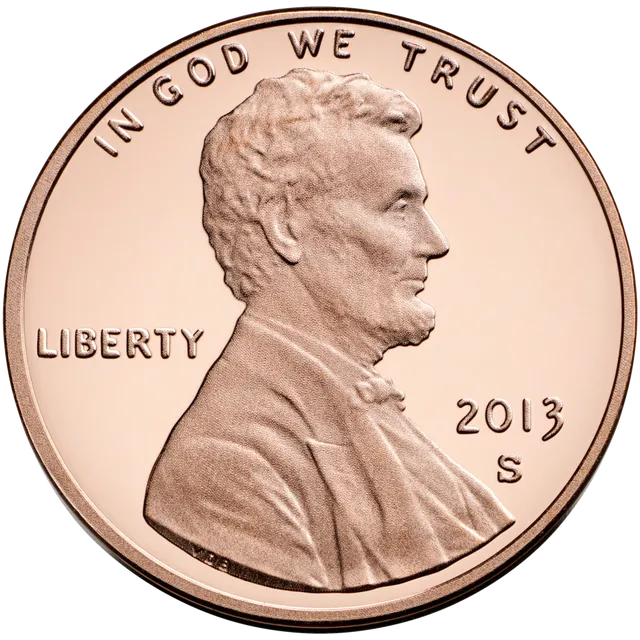
Yes. Treasury’s FAQ says pennies “will continue to be legal tender” and keep their face value permanently. It cites about 114 billion pennies in existence (a figure that traces back to a 1999 New York Fed estimate, so treat it as rough) and asks people to spend the ones they have so the Federal Reserve can keep them circulating.
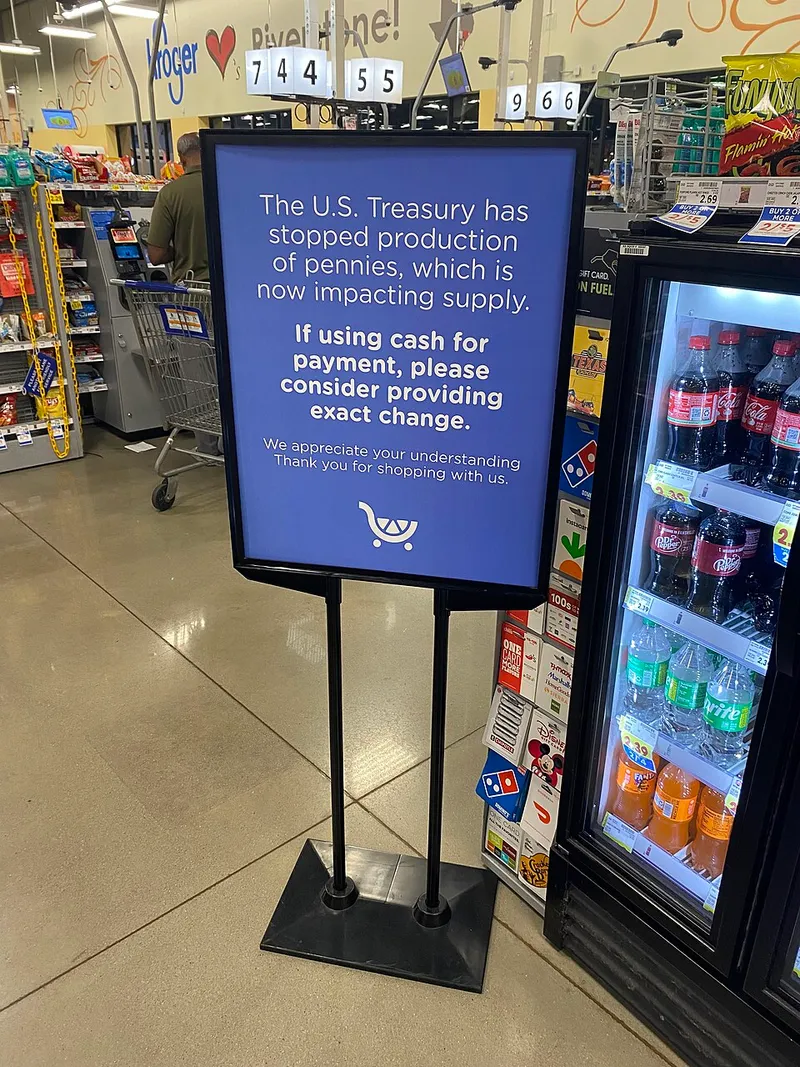
Pennies did get scarce. Some Federal Reserve coin terminals stopped taking or filling penny orders in late 2025, and in January 2026 the St. Louis Fed reported that none of its district’s terminals were filling penny orders because of low inventory. Stores responded with signs asking for exact change or announcing rounding.
How does rounding work without pennies?
Treasury’s guidance, which isn’t binding, rounds the final cash total to the nearest five cents, symmetrically:
| Total ends in | Rounds to | Example |
|---|---|---|
| 1 or 2 cents | Down to 0 | $4.12 → $4.10 |
| 3 or 4 cents | Up to 5 | $4.13 → $4.15 |
| 6 or 7 cents | Down to 5 | $4.17 → $4.15 |
| 8 or 9 cents | Up to 0 | $4.18 → $4.20 |
Round only after sales tax, and only for cash. Card, check and gift-card payments stay exact to the cent. Treasury says stores that still have pennies can keep giving them as change. The Richmond Fed has estimated the net cost of rounding to shoppers at about $6 million a year, a few cents per person.
Several states passed their own rounding laws in 2026, including Washington, Florida, Maryland, Vermont, Arizona and Indiana. Rules differ on whether rounding is allowed or required, so check your state if you run a business.
Can you melt pennies for the copper?
No. Since 2007, federal rule 31 CFR 82.1 has banned melting or exporting pennies and nickels without Treasury authorization. Penalties run up to a $10,000 fine and five years in prison. The rule exists because a pre-1982 copper penny holds more than a cent of copper, and the government didn’t want coins disappearing into smelters.
You can still keep, collect and sell pennies as coins. Pre-1982 copper cents are popular with collectors who sort rolls by weight (3.11 grams for copper, 2.5 for zinc). Before you spend an old jar of change, check for valuable dates: Lincoln wheat cents from 1909 to 1958, the 1943 steel cents, and errors.
What should you do with old coins and pennies?
Pennies are worth one cent unless they’re rare. The coins worth checking are the old silver ones that sometimes turn up in the same jar: dimes, quarters and halves dated 1964 or earlier are 90% silver and worth many times face value. Our guide on how to tell if a coin is silver and the junk silver value guide show how to sort them. A coin shop near you can check old wheat cents and errors in a few minutes.
Common questions
Are pennies being discontinued?
Yes. The U.S. Mint stopped making pennies for circulation; the last ones were struck in Philadelphia on November 12, 2025. Pennies already out there remain legal tender, and the Mint still makes some cents for collectors.
Why did the U.S. stop making pennies?
Because each one cost about three to four times its face value. In February 2025 the President directed the Treasury to stop, in May 2025 the Mint placed its last order for penny blanks, and on November 12, 2025 it struck the final circulating cents. Treasury expects to save about $56 million a year in material costs.
Are pennies still legal tender?
Yes. The Treasury says pennies remain legal tender and keep their face value permanently. You can still spend them, and banks still accept them.
How much does it cost to make a penny?
3.02 cents per coin in fiscal year 2025, including distribution, according to the U.S. Mint's FY2025 annual report, down from a record 3.69 cents in FY2024. Our coin production statistics page has the full year-by-year series.
How much does it cost to make a nickel?
13.31 cents in fiscal 2025, more than two and a half times its face value. The nickel lost $50.9 million that year. The dime (6.77 cents) and quarter (14.53 cents) still cost less than face value.
Is it illegal to melt pennies?
Yes, in most cases. Federal rule 31 CFR 82.1 bans melting or exporting pennies and nickels without Treasury authorization, with penalties of up to $10,000 and five years in prison.
How do stores give change without pennies?
Many round cash totals to the nearest 5 cents. Treasury's guidance rounds totals ending in 1, 2, 6 or 7 cents down and 3, 4, 8 or 9 cents up, after tax and only for cash. Card and check payments stay exact.
Are the last pennies worth anything?
A circulating 2025 penny is worth one cent like any other. The Mint did strike 232 special 'Omega'-marked final cents for a future auction, and collectible 2026 cents are still being made for collectors.
Where to buy
Online dealers for gold and silver
When a local shop doesn't have what you want, these established online dealers ship insured nationwide.
APMEX
One of the largest U.S. online bullion dealers, trading for 20+ years with 1M+ customers.
- Gold & silver coins, bars and rounds
- Live prices tied to spot
- Insured shipping to your door
Bullion Exchanges
Online precious-metals dealer with a deep catalog of bullion coins and bars.
- Gold, silver & platinum bullion
- Government-minted coins and private bars
- Ships nationwide
Keep going
Sources
- U.S. Mint: FY2025 Annual Report (unit cost and seigniorage by denomination)
- U.S. Mint: FY2024 Annual Report
- U.S. Treasury: Penny Production Cessation FAQs (December 23, 2025)
- U.S. Mint: Ceremonial strike for final production of the circulating one-cent coin
- U.S. Treasury: U.S. Mint FY2027 Budget in Brief (FY2025 seigniorage per dollar)
- Federal Reserve Bank of St. Louis: A penny costs more than a penny (May 2026)
- Federal Reserve Bank of St. Louis: Making sense of not making cents (January 2026)
- KSL: Treasurer strikes final pennies at Philadelphia Mint (November 2025)
- NBC Los Angeles: U.S. Mint moves forward with plans to stop penny production (May 2025)
- American Banker: Senate sends penny bill to the President's desk (September 2026)
- MultiState: How states are regulating price rounding after the penny phase-out (March 2026)
- 31 CFR 82.1: Prohibition on exportation, melting or treatment of 5-cent and one-cent coins
- 31 CFR 82.4: Penalties
- Numismatic News: Nickel, cent exceed face (2006)
- Wikipedia: Penny (United States coin)
- Wikipedia: Penny debate in the United States